
Wellness
CBD Massage: What the Research Actually Says
The evidence for topical CBD is thinner than the marketing suggests. Here's what we can and can't tell you about the CBD lotion add-on.
Published 5/10/2026· By Kristian Fennessy, CMT
The research on topical CBD — the kind in a massage lotion — is thin, and we'd rather tell you that in the first sentence than bury it under marketing language. What we can say with confidence is more modest: the lotion is pleasant, clients who choose it tend to choose it again, and some tell us they feel less sore the next day. Those are real observations from real sessions. They are not the same thing as clinical evidence: the risk for most adults is low, but nobody has yet shown that the lotion adds anything the massage itself doesn't, and this post is about keeping the two separate.
What the add-on actually is
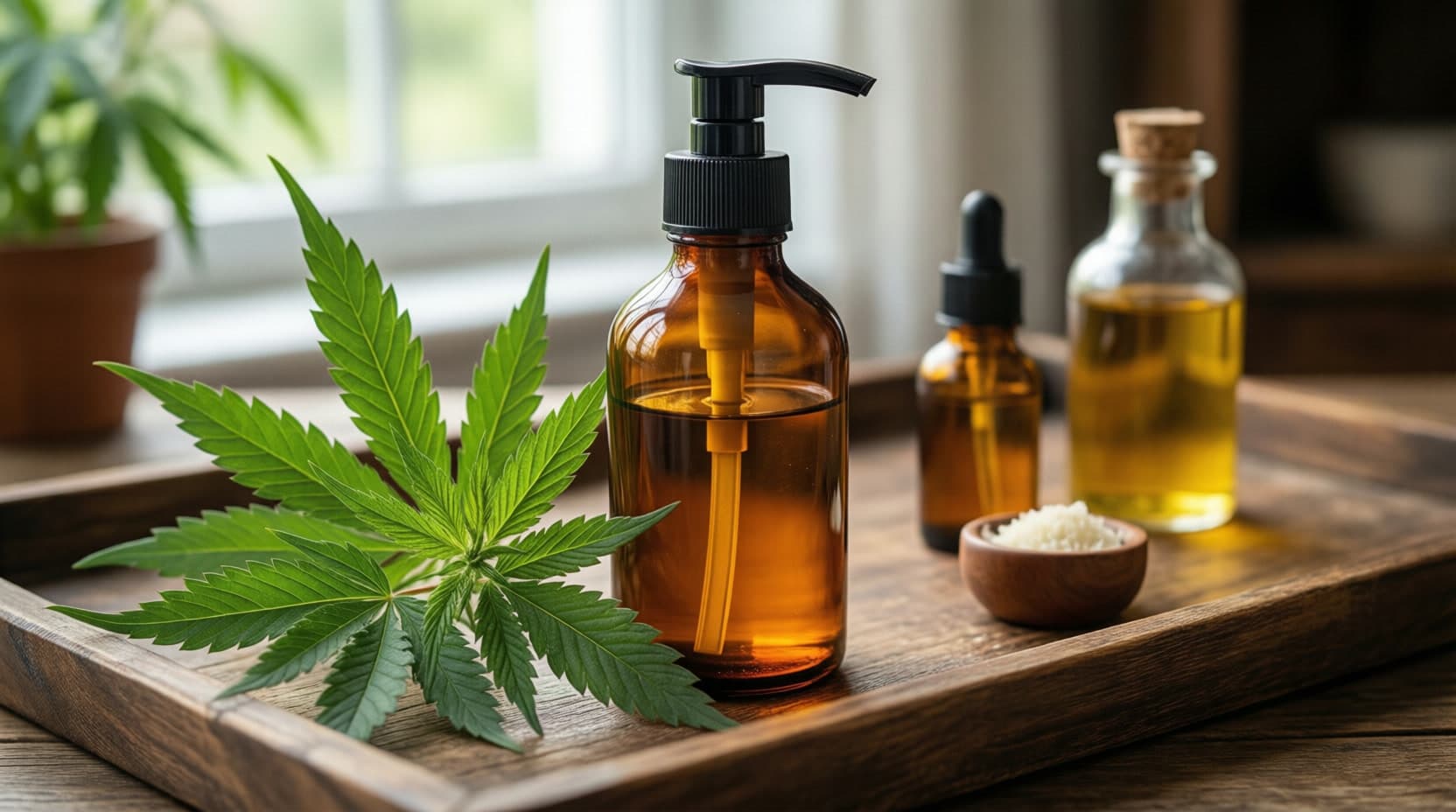
When you add CBD to a session, we swap the standard lotion for one infused with cannabidiol, a compound from the hemp plant that does not produce a high. Nothing else about the session changes — same techniques, same pressure, same draping. It costs $10 on top of any session length; the full price breakdown is on the pricing page.
That's worth stating plainly, because a CBD massage is easy to mistake for a different treatment. It isn't. It's a lotion choice.
Topical and ingested CBD are two different questions
Most of what you've heard about CBD comes from research on ingesting it, often at doses far beyond anything a lotion delivers. There is exactly one FDA-approved CBD product: a prescription oral medication for rare seizure disorders. That approval is genuinely impressive science, and it has nothing to do with rubbing lotion on your back.
Skin is a barrier by design. Topical CBD mostly stays near where it's applied, with very little reaching the bloodstream. In a 2026 crossover study, the same hemp extract produced about fifteen times more CBD in the blood when swallowed than when rubbed on the skin, and the topical levels were often too low to measure. So when a product promises whole-body effects — better sleep, less anxiety, reduced inflammation "throughout the body" — from a topical, the mechanism doesn't hold up. If topical CBD does anything, the plausible version is local: an effect on the skin and tissue where it's applied.
What the studies show, honestly read
The topical research that exists has real limitations. Sample sizes are small. Study durations are short. Some of the most-cited findings on joint comfort come from animal studies, such as a 2016 study of CBD gel in rats with arthritis, which don't reliably predict what happens in people. When a federally funded living review of cannabis products for chronic pain was updated in 2025, it rated the evidence on topical CBD insufficient to draw conclusions.
And there's a problem specific to our line of work: in a CBD massage study, you can't easily separate the lotion from the hands. Massage on its own already eases post-exercise soreness, according to a 2017 meta-analysis of randomized trials. Isolating whatever the CBD adds requires placebo-controlled trials with a plain-lotion comparison, and those are rare. The few that exist show mixed results: a handful of small trials, mostly in jaw pain, report benefits, while a 2026 pilot trial found a CBD gel did no better than a placebo gel for muscle soreness after hard exercise.
So the fair summary as of 2026: topical CBD might offer mild local comfort for some people, the evidence is preliminary, and anyone who tells you it's proven is selling something.
One more wrinkle worth knowing: the topical CBD market is lightly regulated. When Johns Hopkins researchers tested 105 topical CBD products bought online and in national retail stores, only 24% were accurately labeled for CBD; 18% held meaningfully less than the label said, 58% held more, and 35% contained THC. The milligram number on a jar tells you what supposedly went into the batch, not what reaches your tissue. That's part of why we'd suggest trying it for $10 in a session before buying a jar of your own.
What clients tell us
Here is the other half of the honest picture. Clients who add CBD lotion generally like it. A number of them report feeling less sore the day after deep tissue work than they expected. A few have made it a standing part of every booking.
Could placebo explain whatever difference you notice? It may well. That doesn't make the preference wrong. If the lotion is part of a session you enjoy more, that has value even if the mechanism turns out to be mostly ritual. We just won't dress the observation up as proof. We take the same approach with cupping: describe what we actually see, hedge what we can't verify, and let you decide.
Who should skip it
A few situations where we'd steer you away from the add-on:
- Pregnancy and breastfeeding. CBD is potentially unsafe in pregnancy, and the FDA strongly advises against CBD in any form while pregnant or breastfeeding. We never use CBD lotion in prenatal sessions, full stop, and if you're breastfeeding, skip the add-on.
- Workplace drug testing. Many CBD products contain trace THC. A positive test from a topical is unlikely, but "unlikely" is not a word to gamble a security clearance on.
- Reactive skin. If your skin protests new products, stick with the standard lotion. A massage is a lot of surface area for an experiment.
So is it worth $10?
If you're curious, like the idea, or you've noticed it helps your recovery — yes, it's a low-cost, low-risk addition to a session you were already booking. If you're hoping it will fix chronic pain or do something the massage itself can't, save the $10. The hands are still the main event.
Ready to book?
You can add CBD lotion to any session when you book, or just ask when your therapist arrives.
Book your mobile massage onlineQuestions
Frequently asked
Keep reading
Related articles
Ready to book?
We bring the table, linens, and calm — you keep the couch afterward.