
Wellness
Prenatal Massage by Trimester: What Changes and When
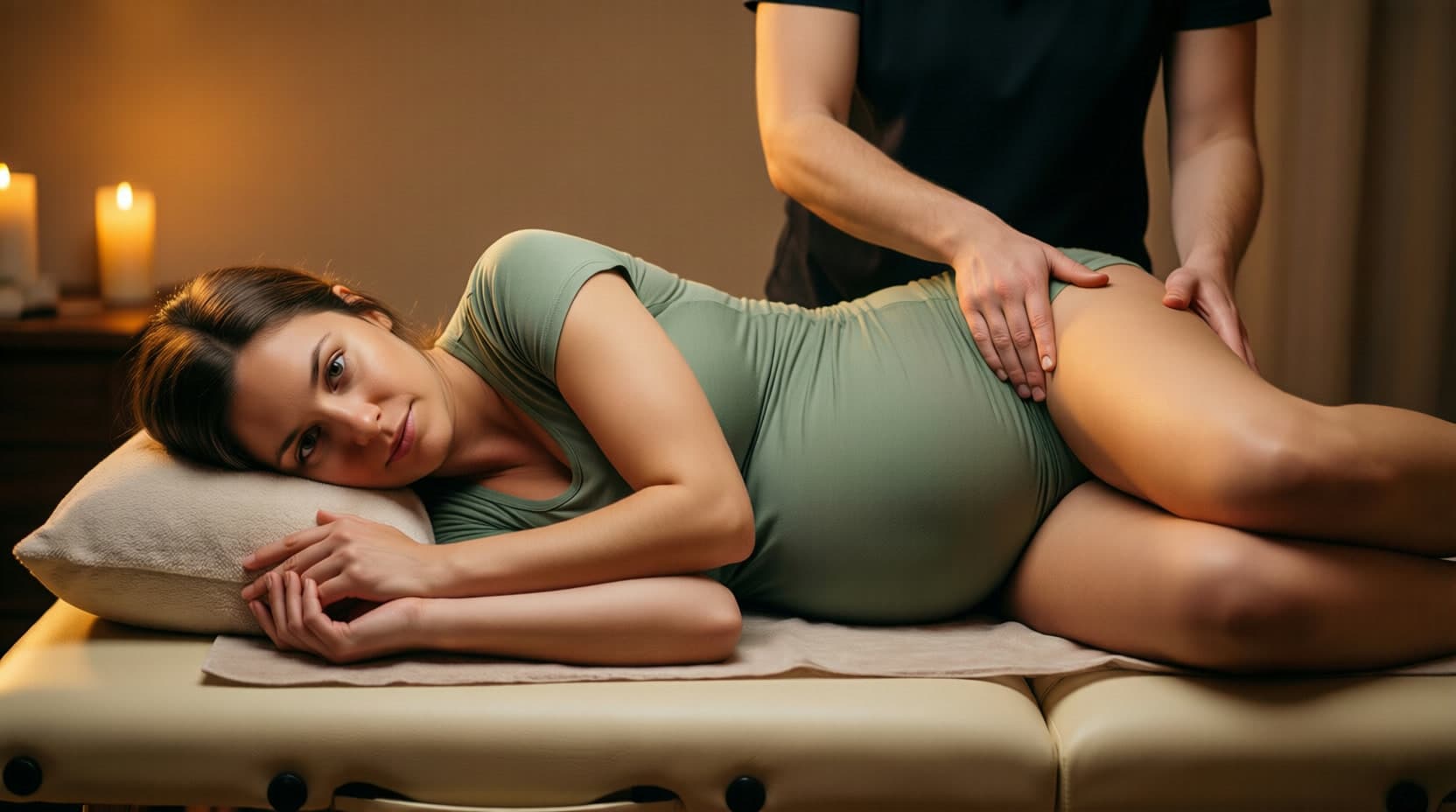
We schedule prenatal massage from the second trimester onward, always side-lying with bolster support. Here is what changes as pregnancy progresses — and when to talk to your provider first.
Published 4/12/2026· By Kristian Fennessy, CMT
The short answer
We schedule prenatal massage from the second trimester onward, and every session is side-lying with full bolster support, never face-down or on your back. Within that policy, what a session actually looks like changes as pregnancy progresses, because the body you bring to the table at 16 weeks is not the body you bring at 36.
Here is how it tends to unfold, trimester by trimester.
First trimester: why we wait
We do not schedule massage during the first trimester. That is our policy, and it is a common one: many providers suggest waiting until the second trimester to start massage. The natural risk of miscarriage is highest in the early weeks, and massage has not been shown to cause one, so waiting is simply the cautious choice.
The most useful thing you can do in these early weeks is simple: mention massage to your OB or midwife at a regular visit. Ask whether there is any reason it would not be appropriate for your pregnancy. If the answer is yes, you are ready to book the moment you cross into the second trimester with nothing left to check.
Second trimester: the most comfortable window
Weeks 13 through 27 are, for most clients, the easiest stretch of pregnancy to receive bodywork. Energy is often better than it was, lying on your side for an hour is still comfortable, and the postural changes that drive most pregnancy aches are just beginning.
The work in this window usually concentrates on:
- The low back and gluteal muscles, which start absorbing the load of a shifting center of gravity
- The hips and outer thighs, which tighten as the pelvis begins to adapt
- The upper back and neck, especially for clients still working at a desk through pregnancy
Pressure through the back and hips can be moderate if that is what you like, and it is always yours to adjust: say something and we change it, mid-stroke if needed. What we avoid throughout pregnancy is any massage of the abdomen, deep pressure on the legs (pregnancy raises the risk of blood clots), and certain aggressive techniques; a prenatal session is modified by design, not a regular massage turned on its side.
Your first prenatal session also starts with a longer conversation than usual. Expect questions about how far along you are, who is managing your care, how the pregnancy has gone so far, and where the discomfort actually lives. Two minutes of talking makes the following ninety minutes considerably better.
A word on what prenatal massage is for: comfort, rest, and relief from the musculoskeletal load of pregnancy. Small trials suggest it may ease back and leg pain, help sleep, and lower anxiety, though the research has limits. It does not treat any pregnancy condition, and we will never suggest otherwise.
Wondering how often to book as the weeks go on? We laid out a sample schedule, from week 13 to the due date, in how often to get a prenatal massage.
Third trimester: adapting to the finish
From week 28 on, the session adapts around you rather than the other way around.
Lying in one position gets less comfortable, so we tend to switch sides more often and spend less continuous time on any single area. Bolstering gets more generous — more support under the belly, between the knees, behind the back. Many clients want the pace slower and the pressure lighter than they did ten weeks earlier, and that is exactly right: late pregnancy often brings more fluid in the tissues, and the goal shifts from working out specific tension toward general relief and rest.
Common third-trimester requests we can address include hip and sacrum ache, swollen and tired legs (worked gently, always toward the heart), and the rib and mid-back tightness that comes from simply running out of room. Swelling that comes on suddenly, shows up in your face or hands, or affects one leg more than the other is a different matter: that is a same-day call to your provider, not a massage appointment.
For a closer look at weeks 28 to 40, including sessions at 35 weeks and beyond and the question of pressure points and labor, see massage in the third trimester.
When to get provider clearance first
We recommend that every prenatal client mention massage to their doctor or midwife before the first session. And we ask that you get your provider's explicit okay first if any of these apply: preeclampsia or high blood pressure, placenta previa or any bleeding, a history of preterm labor, gestational diabetes, severe swelling, a history of blood clots or a clotting disorder, or any pregnancy your provider has labeled high-risk.
This is not us covering ourselves. Your OB or midwife knows things about your pregnancy that we cannot know from an intake form, and massage should fit inside the care plan they are managing — not run alongside it unexamined. If you are unsure whether your situation counts, ask them. We are happy to wait for the answer.
Why in-home matters more during pregnancy
Mobile massage is convenient for everyone; for pregnant clients it solves real problems. No driving across San Diego and hunting for parking at 34 weeks. No getting dressed and back in the car while deeply relaxed. Your own bathroom steps away — which, in the third trimester, is not a small thing.
We bring the table, bolstering, and fresh linens to homes across San Diego County, from Point Loma to Poway. If it is your first massage with us, pregnant or not, here is what to expect from an in-home session. Travel is free in Point Loma and Ocean Beach, and our full pricing is listed here — prenatal sessions cost the same as any other session at the same length.
Ready to book?
Second or third trimester, cleared and comfortable? You pick the time, and we confirm every request by text or email within one business day.
Book your prenatal massage onlineQuestions
Frequently asked
Keep reading
Related articles
Ready to book?
We bring the table, linens, and calm — you keep the couch afterward.