
Wellness
Swedish vs Deep Tissue Massage: How to Choose
The most common question we get from new clients, answered honestly: what actually separates Swedish from deep tissue, and how to pick without overthinking it.
Published 7/19/2026· By Kristian Fennessy, CMT
The honest answer first
If nothing specific hurts and you want to leave the table feeling like a different person, book Swedish. If one area — a shoulder, the low back, that spot between the shoulder blades — has been complaining for weeks, book deep tissue. That single question sorts most people correctly, and everything below is refinement.
We field this choice more than any other at booking, usually phrased with a little apology, as if there were an obviously correct answer everyone else knows. There isn't. The two styles solve different problems, and neither is the "serious" option.
What Swedish massage actually is
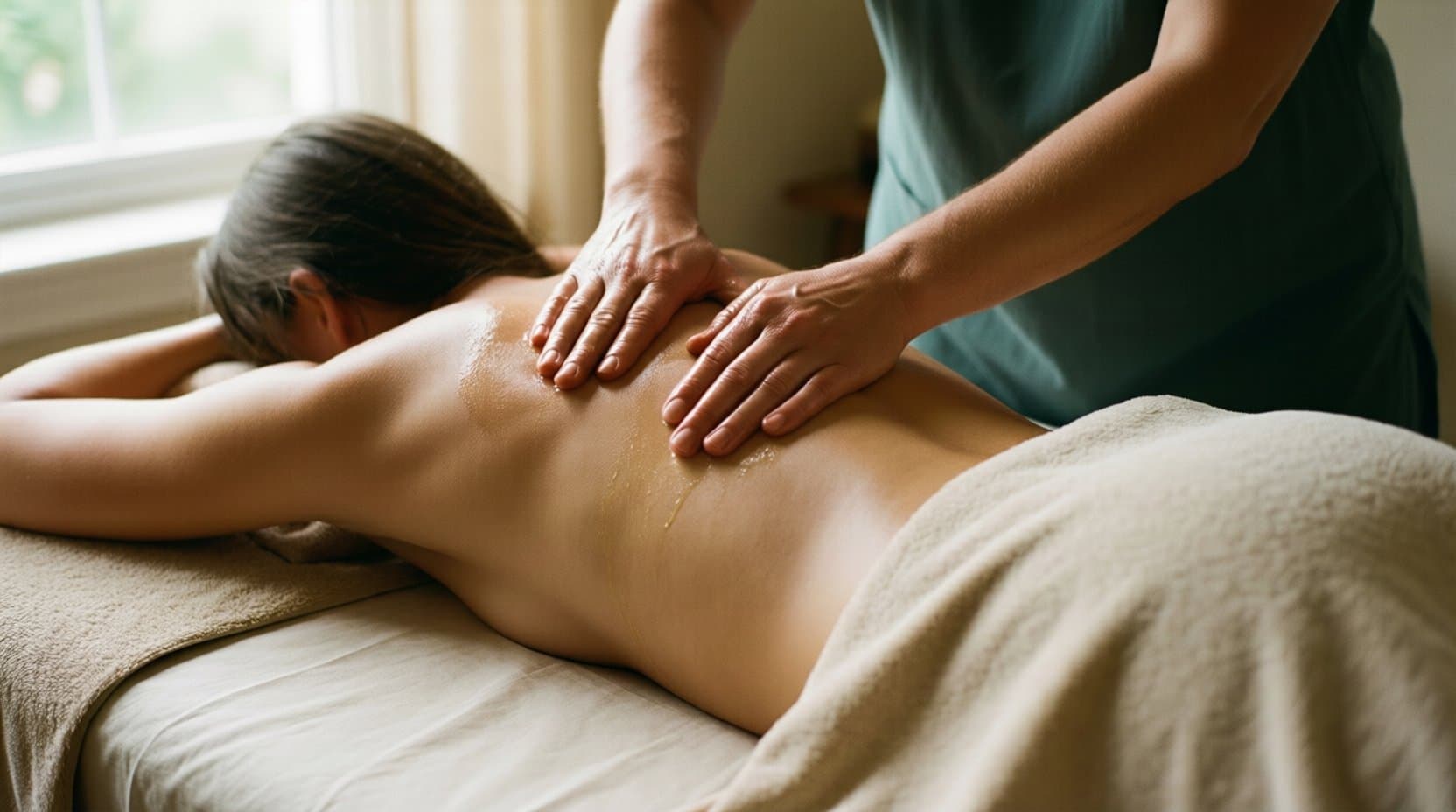
Swedish is the style most people picture when they picture massage: long, gliding strokes with lotion, kneading, gentle rocking, light-to-moderate pressure, one region flowing into the next. The point is systemic. It tends to downshift the nervous system, move circulation along, and leave you with the heavy-limbed calm that makes the drive home feel optional — which, since we come to you, it is.
Swedish earns its keep on stress, poor sleep, general achiness, and recovery weeks. It's also the right default for a first massage, because it gives your therapist a full-body read of how you hold tension without committing an hour to any one theory about it.
What it isn't: weak. Swedish pressure can run firmer than people expect. The defining trait is flow, not force.
What deep tissue actually is
Deep tissue trades coverage for specificity. The strokes slow down, the pressure becomes more sustained, and the work concentrates on particular structures — the fibers along the shoulder blade, the band from neck to shoulder that desk work loves, the hip rotators that make themselves known on stairs. Instead of gliding past tension, the work settles into it and waits for the tissue to let go.
Done well, deep tissue lives at "intense but breathable." You feel it, sometimes vividly, but you can stay relaxed underneath it. What it should never be is bracing-and-enduring — if you're gripping the table, the pressure has passed productive and your therapist needs to hear about it. We wrote a whole guide to pressure because this misunderstanding is common enough to deserve one: soreness for a day or so after focused work can happen, but pain during a session is information, not a rite of passage.
Deep tissue is the tool for chronic, localized tension — the months-old knot, the recurring low-back grip, the desk shoulder that Swedish sessions keep grazing without resolving.
The myth of the massage ladder
The most persistent misconception we meet: Swedish is the beginner massage, deep tissue is the real one, and choosing Swedish means leaving results on the table. It doesn't work that way. Pressure is not progress. An hour of deep, specific work on tissue that mainly needed general restoration leaves you sore without leaving you better; an hour of flowing work on a genuinely stuck shoulder feels pleasant and changes little. The match matters, not the intensity.
There's a practical wrinkle here too: since our pricing is flat — $129, $179, or $229 for 60, 90, or 120 minutes, whatever the style — there's no cost incentive pushing you toward either. You're choosing the tool, not a price tier.
Most real sessions are a blend
The clean version of this choice exists mostly in blog posts like this one. On the table, the line blurs — and should. A typical 90-minute session for a stressed-out client with one angry shoulder might run twenty minutes of Swedish work to warm the tissue and settle the nervous system, half an hour of slow, specific work on the shoulder and neck, and a return to flowing strokes to close. You don't have to specify any of that. Book whichever style sounds closer, then tell us the real goal in the booking notes: "mostly want to decompress, but my right shoulder needs attention" is a perfectly complete prescription.
San Diego adds its own patterns. We see surfers whose paddling shoulders want focused work but whose recovery days want flow, remote workers whose tech neck has a clear epicenter, and runners in training who alternate — flushing Swedish-style work in heavy weeks, deeper work between cycles.
How to decide in thirty seconds
Ask yourself two questions. First: is there a specific spot? If you can point to it and it's been there longer than two weeks, deep tissue. If the answer is "everywhere and nowhere — I'm just wound up," Swedish. Second: what do you want the next morning to feel like? "Rested, like I slept properly" is Swedish. "Looser in that one place, even if it's a little tender" is deep tissue.
Still torn? Book 90 minutes of either and write the notes honestly. The style on the booking is a starting point, not a contract — the session that shows up is the one your body asks for.
Ready to book?
Same table, same flat rates, same therapist attention either way — 7am to 10pm daily, anywhere in San Diego County.
Check live availability and book onlineQuestions
Frequently asked
Keep reading
Related articles
Ready to book?
We bring the table, linens, and calm — you keep the couch afterward.