
Pain Relief
Plantar Fasciitis: Can Foot Massage Actually Help?
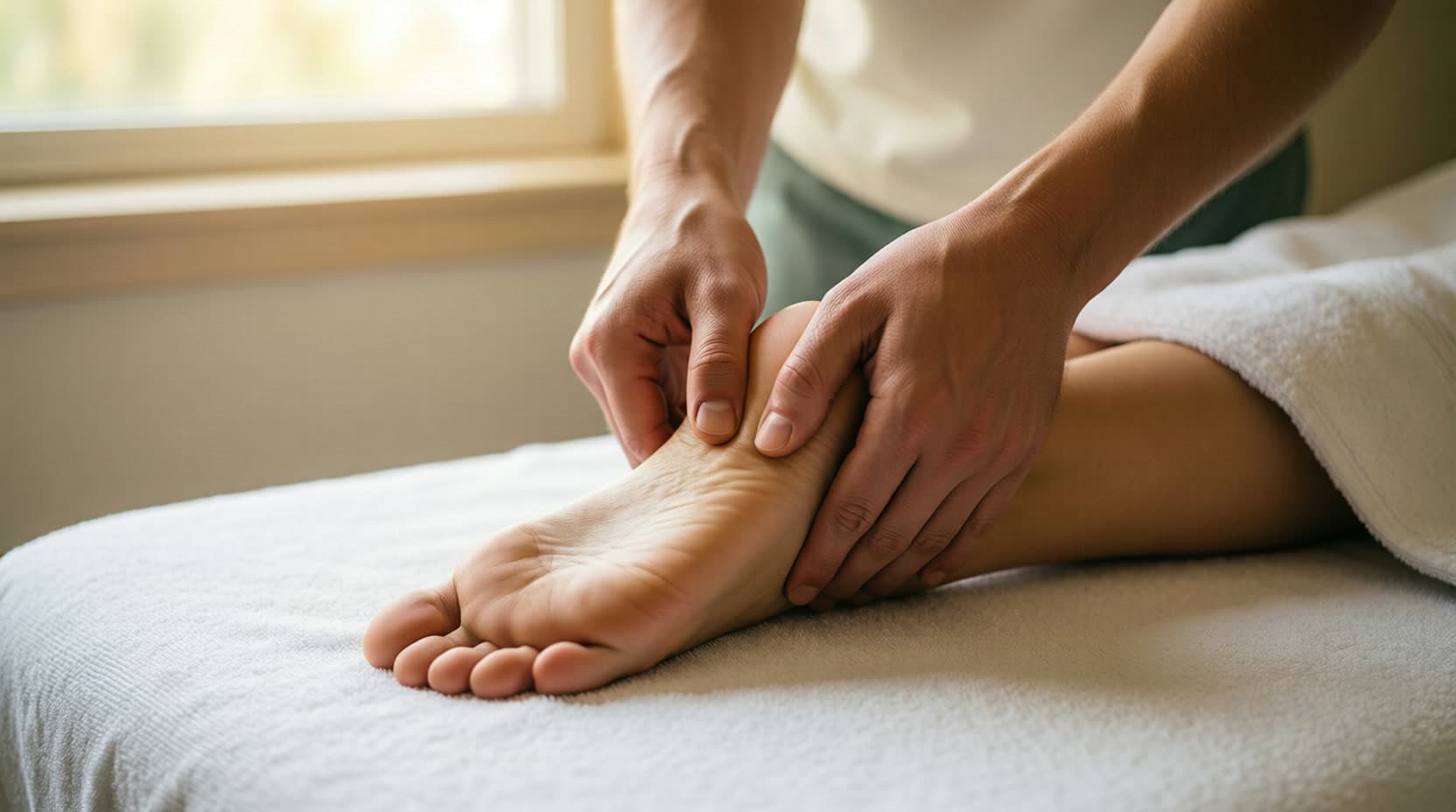
Massage can take some of the load off an irritated plantar fascia by loosening the calves and the small muscles of the foot. It supports recovery; it doesn't repair the tissue on its own.
Published 8/16/2026· By Kristian Fennessy, CMT
The short answer on massage and plantar fasciitis
Massage can help plantar fasciitis feel better, mostly by loosening the calves and the small muscles of the foot that add tension to an already irritated plantar fascia. It won't repair the fascia itself, so it works best as a complement to stretching, better footwear, and a podiatrist's or physical therapist's plan.
That distinction matters, because heel pain is one of those problems where people try one thing hard for a week, see no miracle, and give up. Plantar fasciitis tends to improve slowly with consistent, boring care. Massage is one of the more pleasant parts of that care, and it can make the rest of the plan easier to stick with.
What plantar fasciitis actually is
The plantar fascia is a thick band of connective tissue running from your heel bone to the base of your toes. It helps support the arch and acts a bit like a spring every time your foot loads and pushes off. When it's repeatedly overloaded, the attachment near the heel gets irritated, and you get the classic signature: sharp pain with the first steps out of bed, easing as you walk around, then returning after you've been sitting for a while.
Common contributors include tight calves, a sudden jump in walking or running volume, long hours standing on hard floors, and footwear with little support. San Diego adds its own flavor. A lot of us spend summer barefoot on the sand or in flip-flops, then switch straight into running shoes or work boots in the fall. Long beach walks from Ocean Beach to Sunset Cliffs are lovely, but soft sand makes the calves and feet work in ways they may not be conditioned for.
Where massage can help
The calves come first
The calf muscles connect to the heel through the Achilles tendon, and tension there tends to increase the pull on the bottom of the foot. That's why a good session for heel pain often spends more time above the ankle than below it. Working through the gastrocnemius and the deeper soleus, then the Achilles area, can reduce the stiffness people feel on those first morning steps.
The arch and foot muscles
The foot has several layers of small muscles along the arch. Moderate, patient pressure there, plus some work between the metatarsals, can make the foot feel less rigid and more willing to flex through each step.
What we avoid
Hard, direct pressure on the painful spot at the front of the heel isn't a good idea during a flare. Irritated tissue doesn't need more irritation. Our therapists work around the hot spot, check in about pressure, and keep the most tender area light. If you prefer firm work elsewhere, a deep tissue massage can go deep on the calves while staying gentle at the heel.
What massage can't do
Massage can't reshape your arch, fix a footwear problem, or replace the stretching and strengthening a physical therapist would prescribe. It also can't diagnose heel pain. A few other conditions, including stress fractures, nerve entrapment, and heel-pad problems, can feel similar, and they need different care.
See a podiatrist or doctor before booking if your heel pain:
- started after a fall, jump, or specific injury
- comes with swelling, bruising, numbness, or tingling
- hurts at night or at complete rest
- makes it hard to put weight on your foot
- hasn't improved after a few weeks of home care
If you've already been diagnosed and cleared for massage, mention it in your booking notes along with anything your provider told you to avoid.
Home care that pairs well with massage
Most of the progress with plantar fasciitis happens between sessions. The habits clinicians commonly recommend are simple:
- Stretch before your first steps. A towel around the ball of the foot for a gentle calf and arch stretch while you're still in bed can take the edge off that first painful stand.
- Roll the arch. A lacrosse ball or a frozen water bottle under the arch for a couple of minutes, with light to moderate pressure.
- Rethink the flip-flops. Supportive shoes around the house and on errands, at least while things are irritated.
- Ramp activity slowly. If a new running habit set this off, back the volume down and build it back gradually. Our guide for San Diego runners covers timing sessions around training.
Most people improve with this kind of conservative care, though it can take months rather than weeks. Consistency tends to beat intensity.
Why in-home sessions suit sore feet
When every step hurts, a drive and a walk across a parking lot is the last thing you want after a session. With mobile massage, our therapists bring the table to your home, and you can go straight from the session to your couch with your feet up. Rates are listed on our pricing page, and a 60-minute session usually leaves room for real calf and foot work plus the back and hips, which often compensate when you've been limping around.
Ready to book?
Note your heel pain and any provider guidance in the booking form, and our therapists will plan the session around it. We come to you anywhere in San Diego County, 7am to 10pm daily.
Check live availability and book onlineQuestions
Frequently asked
Keep reading
Related articles
Ready to book?
We bring the table, linens, and calm — you keep the couch afterward.