
Pain Relief
Massage for TMJ and Jaw Tension: What It Can Do
Massage can't diagnose or fix a jaw joint, but it may ease the tight chewing and neck muscles that often come along with clenching. Here's what external jaw work looks like and when to see a dentist first.
Published 9/13/2026· By Kristian Fennessy, CMT
Can massage help TMJ and jaw tension?
Massage may help jaw tension when the problem is mostly muscular: tight chewing muscles, a clenching habit, and a neck that's been holding your head forward all day. It doesn't diagnose or repair the jaw joint, so if you think you have a TMJ disorder, start with a dentist or doctor and treat massage as one piece of the plan.
That distinction matters because "TMJ" gets used loosely. The temporomandibular joint is the hinge in front of each ear. Temporomandibular disorders (TMD) cover a range of problems with that joint and the muscles that move it, and only some of them are primarily muscular. A dentist or physician is the right person to sort out which one you're dealing with.
Where jaw tension actually comes from
The masseter, the thick muscle you can feel bulge at the angle of your jaw when you bite down, is one of the strongest muscles in the body for its size. The temporalis fans out across your temple. Together they close your jaw, and when you clench or grind, they work long shifts with no rest.
Clenching tends to show up in a few familiar ways. Some people do it at night and only find out when a dentist points to wear on their teeth. Others catch themselves doing it at a desk in Sorrento Valley, in stop-and-go traffic on the 5, or while concentrating on a screen. Stress is a common companion, though it's rarely the only factor.
The neck is the other half of the story. Forward head posture changes how the jaw sits and how hard the muscles around it have to work. The upper trapezius, the sternocleidomastoid along the side of the neck, and the small suboccipital muscles at the base of the skull often feel as tight as the jaw itself. We covered that neck and head link in more depth in our post on tension headaches, and many people with jaw tension recognize themselves in both.
What external jaw massage looks like
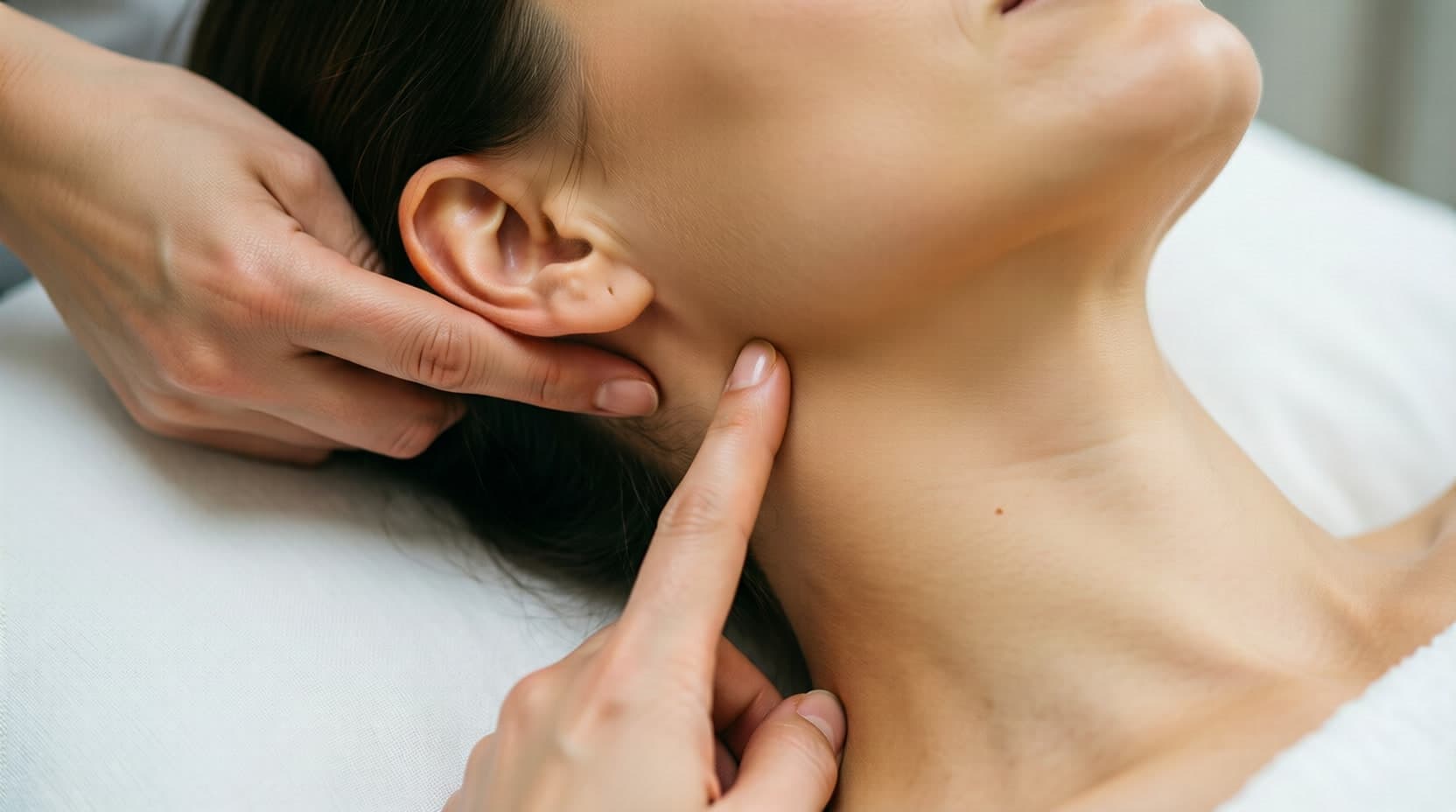
Our therapists work from the outside only. That means the jawline, cheeks, temples, scalp, the area just in front of the ears, and then the neck, shoulders, and upper back. We don't do intraoral work, meaning we never work inside the mouth.
A typical approach for jaw tension during a session:
- Neck and shoulders first. Softening the upper traps and the muscles at the base of the skull tends to make the jaw more comfortable to work on.
- Masseter and temporalis. Slow, sustained pressure and gentle strokes along the jaw and across the temples, with the pressure kept well within your comfort.
- Scalp and face. Lighter work that many people find calming, and that fits naturally at the end of a session.
- Check-ins throughout. The masseter can be surprisingly tender. You should feel pressure and some release, never sharp pain or anything in the joint itself.
This kind of work fits inside a Swedish massage when relaxation is the main goal, or a deep tissue session when the neck and shoulders need more focused pressure. Tell us about your jaw in the booking notes so the session plan leaves time for it.
What the research says, honestly
Studies on massage and manual therapy for jaw muscle pain are limited in size and quality. Some small trials suggest massage and related techniques may reduce pain and improve how far people can open their mouths, at least in the short term. Reviews tend to conclude that the evidence is mixed and that manual approaches work best alongside other care, such as guidance from a dentist, a night guard when one is recommended, or physical therapy focused on the jaw.
So the fair summary is this: massage may make tight jaw and neck muscles feel better, and many people find it relaxing enough that they notice their clenching more afterward. It doesn't correct a bite, reposition a disc, or replace a professional evaluation.
When to see a dentist or doctor first
Get a professional opinion before booking massage for your jaw if you notice any of the following:
- Your jaw locks open or closed, or you can't open your mouth fully
- Your bite suddenly feels different
- Pain began after a fall, accident, or blow to the face
- Clicking or popping comes with pain, or symptoms keep getting worse
- Swelling, fever, ear symptoms, or headaches that feel new or unusual
Once a dentist or doctor has ruled out problems that need their care, massage can be a reasonable way to support the muscles around the jaw.
Small habits that support the work
A few things tend to help between sessions. Notice when your teeth are touching during the day; at rest, most people's teeth sit slightly apart with the tongue resting lightly on the roof of the mouth. Take a short break from the screen to reset your head over your shoulders. Warm compresses along the jaw feel good to many people after a long day. If a dentist has fitted you with a night guard, wear it.
For desk workers, the setup matters as much as the massage. Our tech neck guide covers the screen height and chair adjustments that take load off the neck, which often takes load off the jaw too.
Ready to book?
Mention your jaw tension in the booking notes and our therapists will plan time for the neck, temples, and jaw. Sessions run 7am to 10pm daily at your home, hotel, or office anywhere in San Diego County.
Check live availability and book onlineQuestions
Frequently asked
Keep reading
Related articles
Ready to book?
We bring the table, linens, and calm — you keep the couch afterward.