
Pain Relief
Trigger Points: Causes, Symptoms & What Massage Can Do
Trigger points are tender, hyperirritable spots in muscle that can come with local and referred pain. The science behind them is contested, but targeted pressure may help some people feel better.
Published 11/23/2025· By Kristian Fennessy, CMT
What are trigger points?
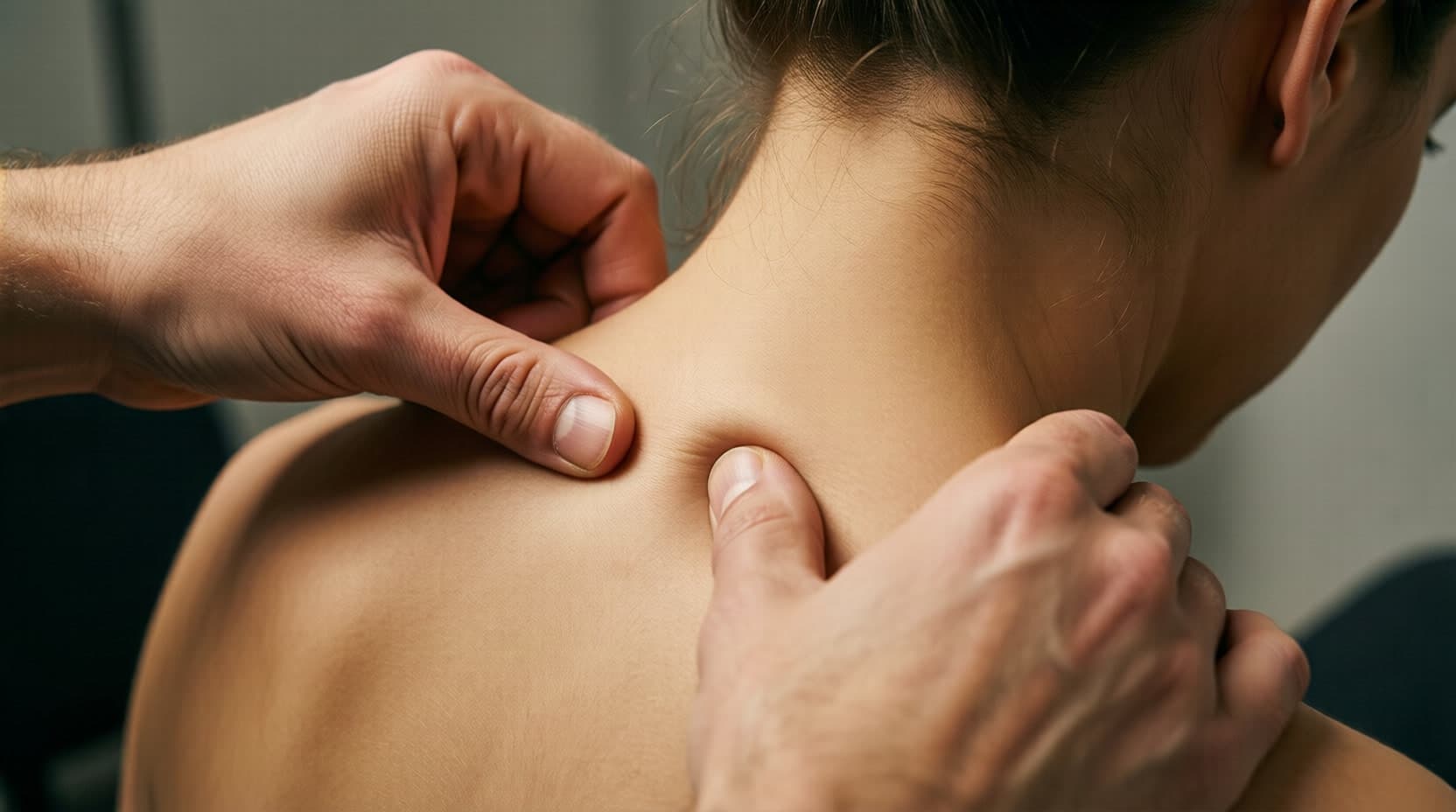
Trigger points are tender, hyperirritable spots in muscle, the familiar "muscle knot". The classic model describes them as tight, contracted bands that do not fully release on their own. When you press on one, it typically produces a recognizable ache, and it may send sensation to another area of the body. This is called referred pain, and it is one of the defining features in the trigger point model.
That model is contested, and we think you should know it. A systematic review found that examiners could not reliably agree on where trigger points are, and a 2015 critical review in the journal Rheumatology argued that the idea of trigger points as physical lesions has no sound scientific basis, while agreeing the pain and tenderness are real and likely involve nerve sensitivity. Therapists still use the referral maps as a practical guide.
Commonly described referred pain patterns include:
- Upper trapezius trigger points that refer pain up the side of the neck and into the head — a common driver of tension headaches
- Gluteal trigger points that refer into the hip or down the leg
- Infraspinatus trigger points that refer down the arm
What causes trigger points to form?
Trigger points are commonly linked to:
- Repetitive strain — typing, lifting, or any activity that loads the same muscle in the same way repeatedly
- Sustained posture — sitting at a desk for hours, looking down at a phone, or any position held without adequate movement breaks
- Acute injury or overexertion — a muscle pushed beyond its capacity may respond with protective guarding that can persist
- Emotional stress — the neck, shoulders, and jaw commonly hold tension associated with psychological stress
The model also describes "latent" trigger points: tender spots that cause no symptoms until something like the above irritates them.
How massage helps
Massage is one common way to work on trigger points, and the evidence is modest. A 2019 meta-analysis of 19 trials of trigger point manual therapy for chronic pain found gains in function but no clear short-term pain relief, and rated the evidence weak. Here is what happens during targeted work:
- Locating the point — your therapist palpates through the muscle to find the taut band and the specific hyperirritable spot within it.
- Sustained pressure — your therapist applies sustained compression to the spot, holding while the tenderness eases, which often feels like softening under the finger.
- Lengthening the muscle — afterward, your therapist uses gentle stretching and broader massage to help the muscle move comfortably.
- Broader strokes — effleurage and petrissage finish the area, which many people find soothing after focused pressure.
Techniques commonly used
- Trigger point therapy (ischemic compression): sustained pressure directly on the trigger point
- Myofascial release: broader, slower pressure on the connective tissue surrounding the affected muscle
- Deep tissue massage: used to address the surrounding muscle layers and any secondary tension
- Passive stretching: applied afterward to help the muscle move comfortably
Trigger points in San Diego's active population
San Diego's outdoor culture is wonderful for quality of life, and every sport loads the body in its own way. Runners often notice tender spots in the hip flexors and calves. Cyclists feel it through the upper back and neck. Surfers feel it around the shoulders. Desk workers know the classic upper trapezius-to-head referred pain pattern.
We work with clients across San Diego County, coming directly to your home or hotel, and can focus a full session on trigger point work or fold it into a broader session depending on what you need. If pain is new, severe, or comes with numbness or weakness, see a doctor first.
Ready to book?
Book your mobile massage onlineQuestions
Frequently asked
Keep reading
Related articles
Ready to book?
We bring the table, linens, and calm — you keep the couch afterward.